
The scientific understanding of energy — conserved, transformable, never created or destroyed — resonates strikingly with ancient wisdom. In the Bhagavad Gita, we find verses describing the eternal Atman (Self) as neither born nor destroyed, the unchanging reality behind all changing forms. Energy in physics behaves similarly: its total quantity remains constant while its forms shift endlessly.
Yet science stays neutral on meaning. Energy has no consciousness in the physicist’s model. It is a property, not a living entity. Feynman’s honest admission that we don’t fully know what energy is philosophically leaves space for wonder.
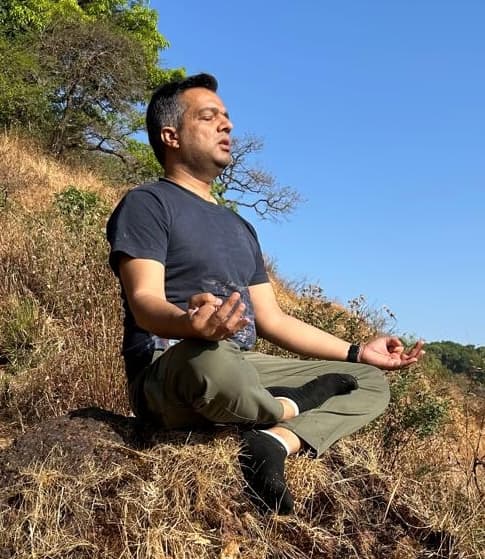
Hindu thought fills that space with reverence. Concepts like prana (vital life force) and Shakti (divine feminine energy) are seen as manifestations of cosmic intelligence. Shakti is the active power of Brahman, the ultimate reality. While not identical to joules, these subtle forces point to an intelligent, creative energy that science measures but spirituality experiences directly through practices like pranayama and yoga.
The story of human civilization as the story of energy thus gains a sacred layer. Mastering external energy (fire, steam, electricity, nuclear) has transformed societies. Mastering inner energy — balancing Shiva (consciousness) and Shakti (life force) — transforms the individual. Both point to the same truth: energy is the universal currency of change, whether in galaxies or in the human heart.
Ultimately, whether we approach energy through Noether’s theorem or through the dance of Shiva and Shakti, we arrive at awe. Energy reveals a universe that is dynamic yet governed by deep order — conserved yet endlessly creative.