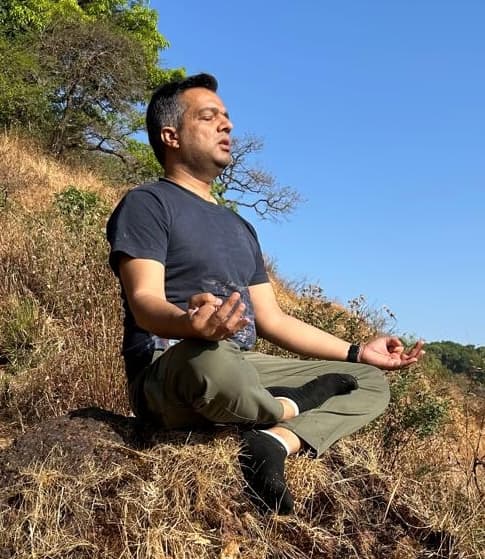

In Hindu philosophy, particularly in Tantra, Yoga, and Shaktism, the question of energy takes on a living, intimate dimension. Here, Shakti (शक्ति) is not merely a metaphor. In Sanskrit, Shakti means power, energy, ability, strength, or force. She is the dynamic, creative, feminine principle that animates the universe — the power responsible for creation, preservation, and destruction (srishti, sthiti, samhara).
Shakti is personified as the Goddess — Devi, Mahadevi, or Adi Parashakti — often worshipped as Durga, Kali, Parvati, or Lalita. In Shaktism, Shakti is the Supreme Reality, revered as the Divine Mother. Without Shakti, the universe would be inert.
Shiva and Shakti
This brings us to the beautiful duality (and ultimate unity) of Shiva and Shakti. Shiva represents pure consciousness — the static, unchanging witness (Purusha). Shakti represents energy and power (Prakriti) — the dynamic, active force. They are inseparable. The classic teaching says: "There is no Shiva without Shakti, and no Shakti without Shiva." Shiva without Shakti is like a corpse (shava); Shakti without Shiva has no direction. Their union, often depicted as Ardhanarishvara (half male, half female), is the source of all creation. In many traditions, Shiva is Brahman in its transcendent aspect, and Shakti is Brahman in its immanent, creative aspect.
The human mirror
This cosmic principle finds its perfect mirror in the human organism. Is it possible that the human mind/consciousness is Shiva, and the energy is Shakti, and their combination is what makes life and procreation possible?
Yes — this is a central, time-honored teaching in Hindu Tantra, Yoga, and Shaiva/Shakta philosophy. The human body and mind are literally the living play of Shiva and Shakti.
Mind / consciousness as Shiva
In yogic anatomy, Shiva is the silent, witnessing awareness — the unchanging “I AM” at the core of your mind. He resides in the Sahasrara chakra (crown of the head), the seat of supreme awareness. Pure consciousness alone is inert without energy.
Energy in the organism as Shakti
She manifests as Kundalini Shakti (coiled at the base of the spine in the Muladhara chakra), prana (vital breath/energy), and all biological, sexual, and mental energies. She is movement, heat, desire, creativity — the force that makes your heart beat, your cells divide, and your thoughts flow. This is the same energy we study in physics, but experienced here as intelligent, conscious, and divine.
Their combination
Their combination creates life itself. Tantra declares again and again: “There is no Shiva without Shakti, and no Shakti without Shiva. The two in themselves are One.”
Life arises only when consciousness and energy meet and dance together. In the body, this union sustains vitality, health, and awareness. When unbalanced, inertia or disease appears. Procreation is the ultimate physical expression: sexual union (maithuna) becomes the microcosmic Shiva-Shakti embrace, birthing new life. Spiritually, when Kundalini Shakti rises and merges with Shiva at the crown, it births a transformed, awakened being.
A verse from Saundarya Lahari by Adi Shankaracharya captures this:
शिवः शक्त्या युक्तो यदि भवति शक्तः प्रभवितुं
न चेदेवं देवो न खलु कुशलः स्पन्दितुमपि ।If Shiva is united with Shakti, He becomes capable of creating. If not, even the Lord cannot make the slightest movement.
In the human being, Shiva (consciousness) + Shakti (life energy) = the living, breathing, reproducing organism. This inner union is the key to vitality, creativity, and spiritual awakening.